
How to Outsmart AI Overviews Without Fancy Tools
Lesson 1, Module 4 of The AI SEO Playbook for LLMs & AI

In Module 1, we got a practical, clear, no-nonsense checklist to get your SEO basics in shape for the AI era. Straightforward steps. No fluff.
In Module 2, we zoomed out to explain why those basics matter now. We discussed how search engines have evolved. Things like semantic search and vector embeddings sound technical, but the point was simple: keywords alone aren’t enough anymore.
In Module 3, we talked about SEO metrics—rankings, traffic, CTR—and why they don’t always reflect reality. I shared why obsessing over those numbers can be misleading, especially now that AI is rewriting how results are shown.
Now in Module 4, we’re getting into planning out your content without using any fancy tools!
Let’s make it simple.
When I was a kid, I loved watching The A-Team. I probably didn’t understand half of it, but I always looked forward to the moment when they got trapped in some barn or warehouse—and somehow built a tank out of junk.
Seriously. No weapons? They’d weld scrap metal and old car parts into something wild. Potato cannons, flamethrowers, distractions with smoke and mirrors—you name it.
They were always under pressure. Short on tools. Working with scraps. And still, they found a way to win.
That’s where we are with SEO today.
You might feel like Google is stealing your traffic. Fewer people click through to websites. It feels like you’re being boxed in.
But there are ways to adapt.
1. Google Tells You Exactly What to Write
You don’t need fancy tools. You need to open a browser.
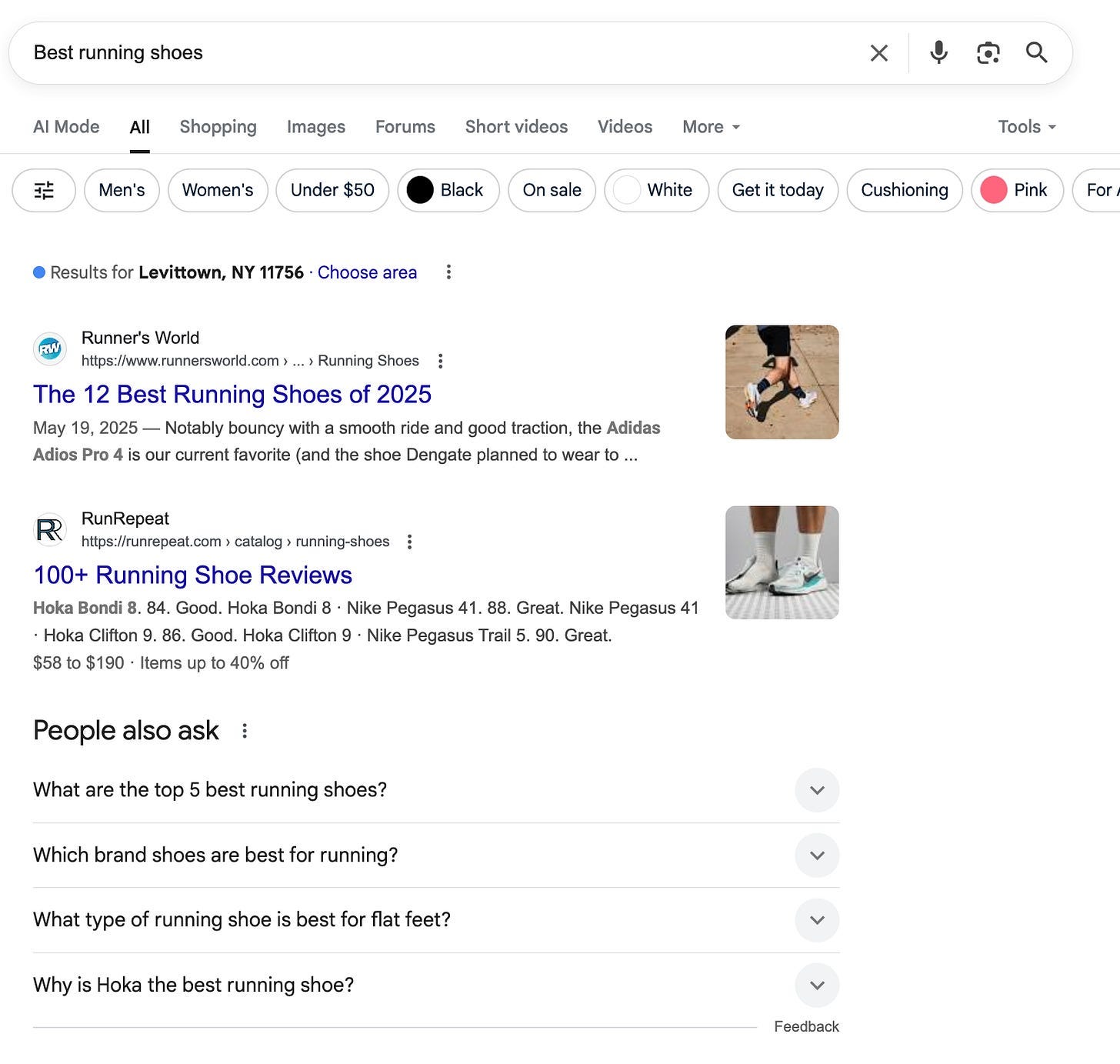
Search your main keyword. Scroll to the People Also Ask section.
Google is showing you what real humans want to know.
It’s not theory. It’s live user intent.
Example:
Search “best running shoes.” People are asking:
What are the top 5 best running shoes?
Which brand of shoes is best for running?
What type of running shoe is best for flat feet?
Why is Hoka the best running shoe?
This Isn’t Just a Blog Post. It’s a Full Content Strategy—If You’re Paying Attention.
Let’s break it down.
Say you’re planning a main article: “Best Running Shoes for 2025.”
In that post, you’re listing five brands: Asics, Brooks, Mount to Coast, Nike, and Topo.
Before you publish that main piece, write a separate review article for each brand. Then, when you publish your main article, you link to those five reviews.
Now, instead of one blog post, you’ve got a mini content hub of six—all tied together, all building your authority.
Common Questions About This Strategy:
How many PAA (“People Also Ask”) questions should I include?
Just one or two per article is fine. Use them to spark related content ideas, not to overload one post.
Should I answer PAA questions in the same post or separate ones?
If the question fits naturally and adds value, keep it in the same post. If it needs a deeper dive, spin it off into its piece.
What if the PAA changes when I refresh Google?
That happens sometimes. Take screenshots during research so you don’t lose useful questions.
How do I track which PAA questions I’ve used?
Simple tools work best—Google Sheets or Notion. But the real goal is keeping track of what content you’ve already published so you avoid repeating yourself.
Can I use this strategy on YouTube or social media?
Yes. The same “hub and spoke” approach works for video content, too. One main video supported by focused, related clips or shorts.
This approach helps you stretch one idea into multiple posts, builds stronger internal links, and makes your site (or channel) more useful to visitors—and to search engines.
No fluff. Just a simple system that works.
2. Reddit Is the New Google (and Nobody’s Ready)
Reddit ranks like crazy on Google Search, plus AI Overviews are pulling in Reddit content.
Gen Z is already using Reddit instead of Google.
Here’s how to find content ideas:
Search: site:reddit.com [your product/topic]
You’ll come up with some great content ideas just by looking at questions people post in your niche.
However, here’s an awesome hack to use the power of Reddit’s brand name to your advantage. Compile several threads on a single topic, looking through the response, and write content like this:
The Best [Product/Service] for [Audience/Use Case] — According to Reddit
Reddit’s Top Picks for [Problem or Goal]
What Reddit Says About [Brand/Product/Topic]
[X] Things Reddit Users Wish They Knew Before Buying [Product/Service]
Reddit Weighs In: [vs Topic / Comparison]
Reddit Answers: [Question your audience is Googling]
Most Recommended [Product] on Reddit Right Now
Best [Products] for [Niche/Use Case] — Reddit Edition
Underrated [Product Type] That Reddit Swears By
Reddit’s Honest Take on [Controversial Product or Trend]
What we’re doing here is taking advantage of Reddit’s SEO power and piggybacking on that.
This is a thing. Here are the search results for “reddit best vpn”
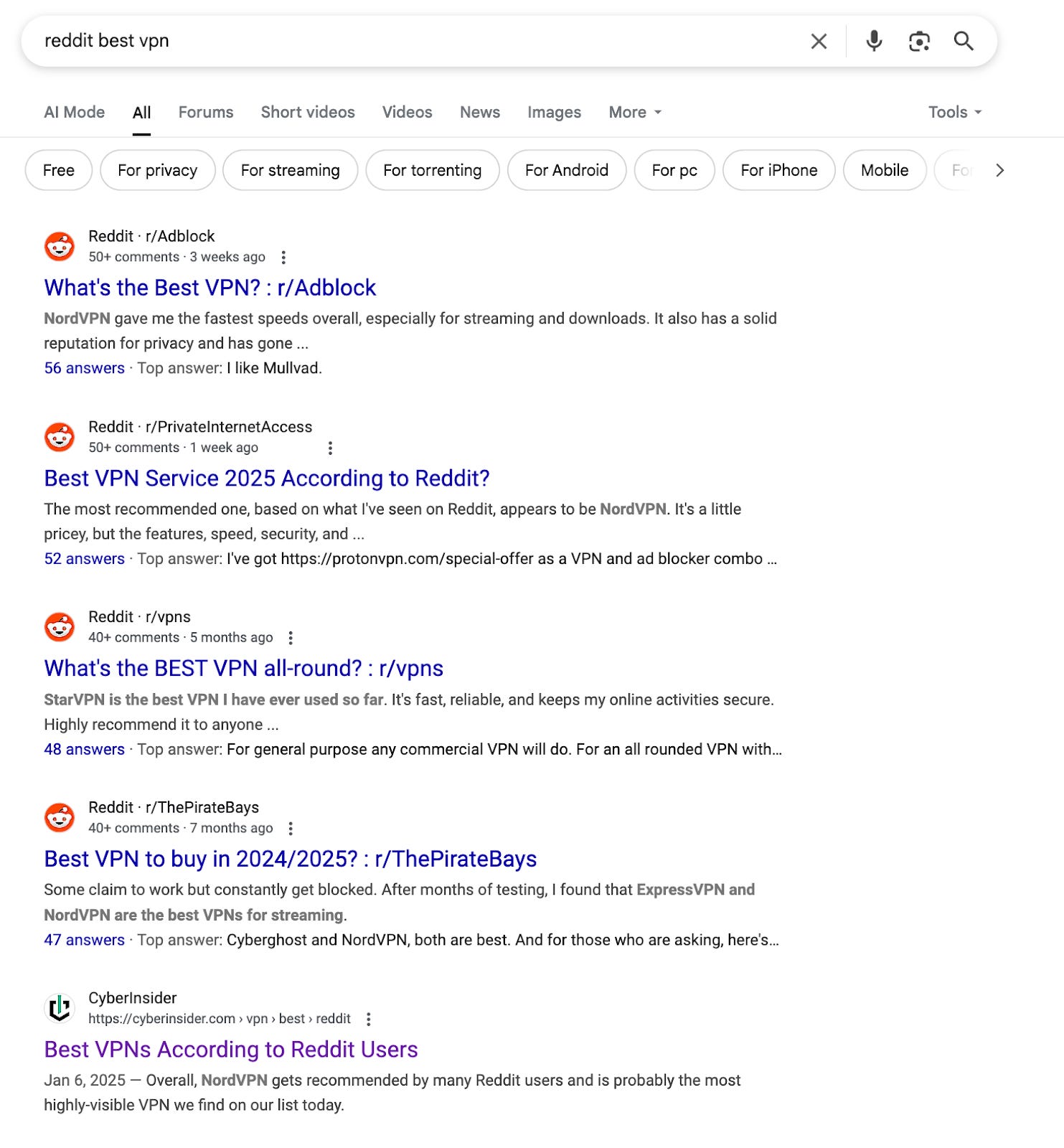
Take a look at this search result: Result #5 – CyberInsider. Solid content.
No, it’s not ranking #1, but it’s on page one, and that matters. Also worth noting: this kind of query doesn’t trigger an AI overview, which gives your content a better shot at visibility.
Yes, People Do Search “Reddit” in Google—And You Can Use That
If you’ve ever Googled something and added “Reddit” at the end, you’re not alone. Plenty of people do it to find real conversations and honest opinions.
Common Questions About Using Reddit in Content:
How do I cite Reddit without sounding spammy or shady?
Keep it simple. Quote or paraphrase naturally. Give context. Don’t overdo it. If you write like a real person, you’re fine.
What if the top Reddit threads are outdated or full of bad takes?
You’re the filter. Use Reddit as a starting point, then do your research. If something’s off or outdated, call it out and explain the better option. That builds trust.
How do I know if Reddit insights are relevant for my audience?
You should already have a sense of what your audience cares about. But even if you’re unsure, write the piece and see how it performs. Feedback, comments, and analytics will tell you what’s landing.
Should I create a Reddit account and engage or just lurk?
Engaging can help. It gives you better instincts for tone and credibility. Plus, it helps you understand what real users are asking—and how they talk about it.
How do I find niche subreddits beyond the obvious ones?
Once you start interacting on Reddit, the platform will recommend related threads and communities. The more you use it, the more useful it gets.
Reddit is full of raw, useful insights—but it’s up to you to shape them into helpful, trustworthy, and on-point for your audience.
3. Stop Thinking in Posts. Think in Clusters.
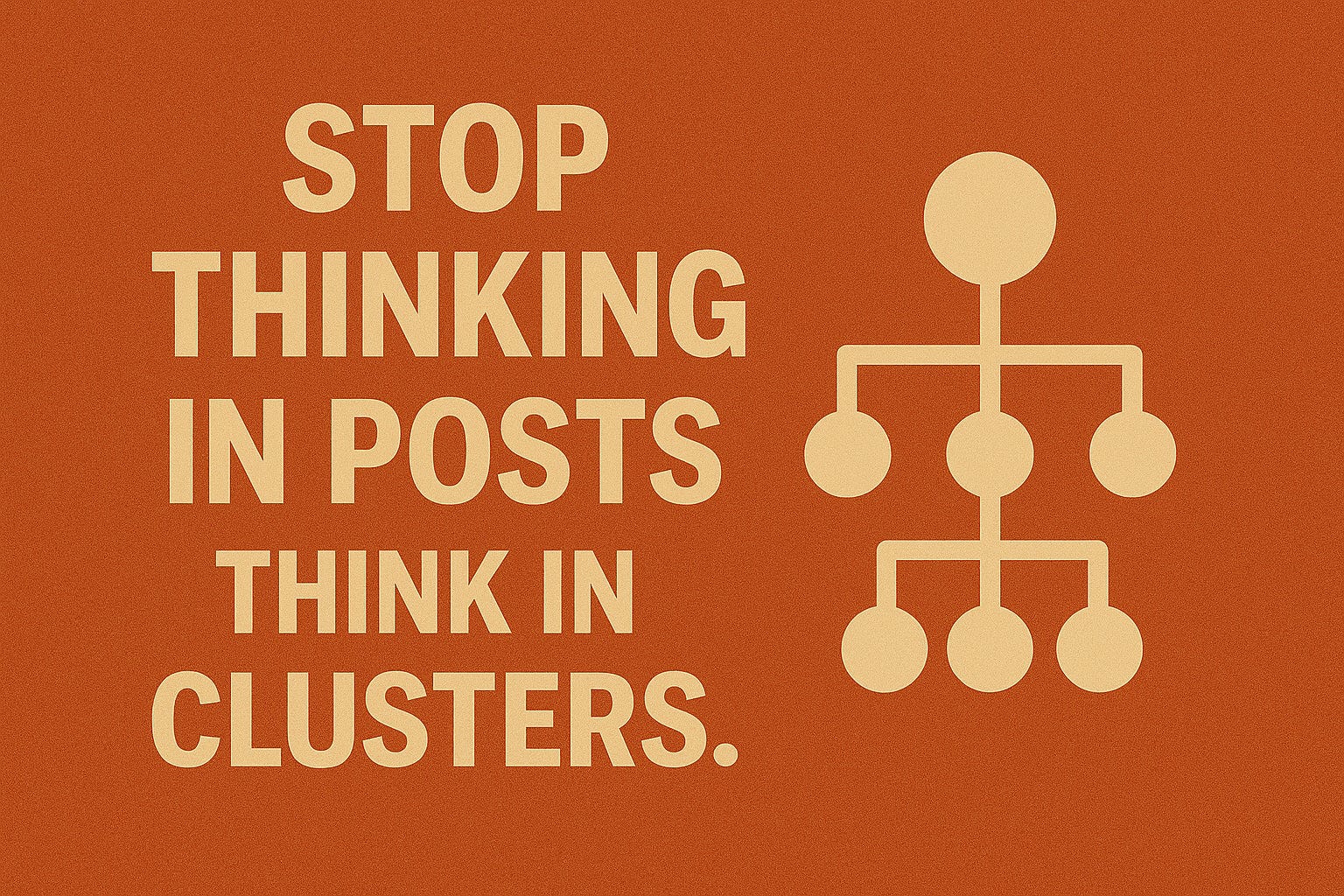
Most creators write one post. Then another. Then another.
That’s random. Try this instead:
Map the buyer’s journey (awareness → consideration → decision)
Think about what the buyer is thinking at each stage about your product or service
Brainstorm and connect content to each stage of the journey
Sample: “Best VPN for Travel” as a Topic Cluster
When someone searches for “Best VPN for Travel,” they’re usually somewhere along a journey, not just looking for a product, but trying to solve a problem or avoid a mistake.
Here’s how that journey breaks down, and how you can create content for each stage:
1. Awareness Stage
Reader thought: “I’m traveling soon. Should I be worried about public Wi-Fi?”
Content idea:
👉 Why Travelers Need a VPN: Top Security Risks Abroad
This piece introduces the problem—cybersecurity risks while traveling—and sets up VPNs as the solution. It's not about brands yet, just about helping the reader understand why this matters.
2. Consideration Stage
Reader thought: “Which VPNs work best when I’m in different countries?”
Content idea:
👉 Best VPNs for Travel (2025 Edition)
This is your pillar page—a deep, comprehensive comparison article. You’ll link to it often, and it should link out to more focused pieces that break down specific VPNs or use cases.
3. Decision Stage
Reader thought: “I just want something fast, reliable, and easy to use.”
Content idea:
👉 Pros and Cons of the Best VPNs for Travel
This helps a reader narrow their options. At this stage, they’re choosing between 2–3 brands and want help making a smart final decision.
4. Post-Purchase Stage
Reader thought: “What if it doesn’t connect in some countries?”
Content idea:
👉 Traveling With a VPN: Common Issues and How to Fix Them
Now you’re helping the reader after the purchase. Troubleshooting, setup tips, and travel-specific advice build trust—and increase the chance they come back to you for future tech guidance.
Understanding Topic Clusters
A topic cluster is just a smart way to organize content:
One main article (the “pillar”) that covers a broad topic
Several supporting posts that dive deeper into subtopics or specific questions
Everything links together, so readers (and search engines) see the full picture
In the VPN example, your pillar is Best VPNs for Travel. Every other article links to it, and it links to each of them.
(We did a version of this with PAA example earlier in the arcticle)
Common Questions About Topic Clusters
Do I need a special tool to manage this?
Nope. A simple Google Sheet or Excel file will do. Notion or Airtable works too if you like a bit more structure.
What if my topic doesn’t lead to a purchase?
Not a problem. Think of it as a reader journey, not just a buyer journey.
Here’s a quick example using a tech topic:
Awareness: “Why does my laptop overheat so much?”
Exploration: “Best ways to cool down an old laptop”
Decision/Next Step: “How to clean your laptop fan step by step”
It’s still a journey—even if no one’s buying anything.
How many posts make a complete cluster?
As many as it takes. There’s no magic number. Some topics are tight and focused. Others grow over time, and clusters can even contain sub-clusters.
Can I cluster across platforms (blog, YouTube, social)?
Absolutely. One idea can be turned into a blog post, a YouTube video, a reel, a carousel, or even a newsletter. Same message, different format.
What if two clusters start to overlap?
If they’re tied to the same larger topic, they can share a pillar. Just make sure each piece of content has a clear purpose and connects naturally.
Topic clusters aren’t just about SEO—they’re about helping real people find what they need, when they need it. When your content matches where someone is in their journey, it works harder for you.
Building topic clusters can be involved, so I’ve built a GPT that helps speed up the process. You can check it out here.
You don’t need to chase every new tool or obsess over every algorithm update. The truth is: the fundamentals still work, especially when you adapt them to the way people search today:
Use Google’s results to guide your content.
Use Reddit to find what real people care about.
Use topic clusters to connect the dots and build authority over time.
You don’t need a huge team or expensive software. You just need a smart system, consistency, and the willingness to stay curious.
This is super helpful, Parth.
I’ve always felt overwhelmed by all the shiny SEO tools out there, but your method strips it down to the essentials that anyone can start using today.
Thank you for sharing, and have a good week ahead.